
Reviewed · EDINBURGH OLD TOWN & HIDDEN CORNERS
Edinburgh: Dean Village & New Town Walking Tour
Two neighborhoods, one calm escape from the center. This Dean Village and New Town walk strings together UNESCO sights, elegant Georgian streets, and peaceful mill-town lanes, all in about two hours. You get Dean Village first, then the planned New Town grid.
I like two things a lot here: the Dean Village stop feels like a breather right after the busier streets, and the guide connects the New Town buildings to ideas from the Scottish Enlightenment. You’ll also hear street-level names tied to David Hume, Adam Smith, and Arthur Conan Doyle, which makes the whole area feel more personal than a list of landmarks.
One drawback to plan for: it is a good chunk of walking on city sidewalks, and the experience runs only in good weather. If rain or wind is strong, you may need to reschedule, since it is weather dependent.
Key highlights worth your attention
- Dean Village first, giving you a quiet start near Princes Street
- UNESCO World Heritage New Town views, squares, and the Georgian street plan
- Street stories with major names, including Hume, Smith, and Conan Doyle
- Castle Rock viewpoints from multiple angles around the New Town route
- Rose Street secret bars explained, tied to how the New Town grew
- Small group size (max 20) that keeps the walk easy to follow
Dean Village to New Town, in a walk that makes Edinburgh feel human
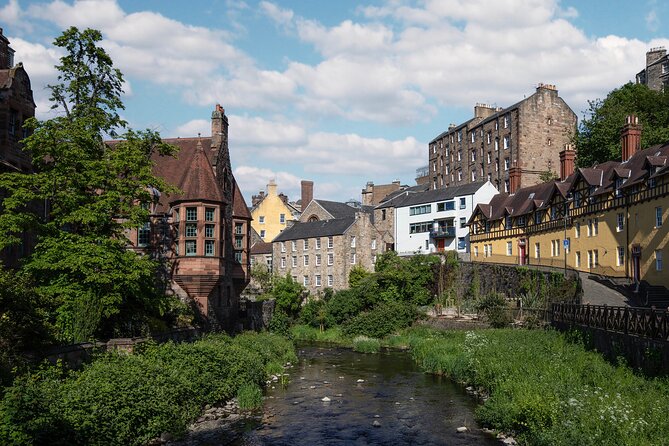
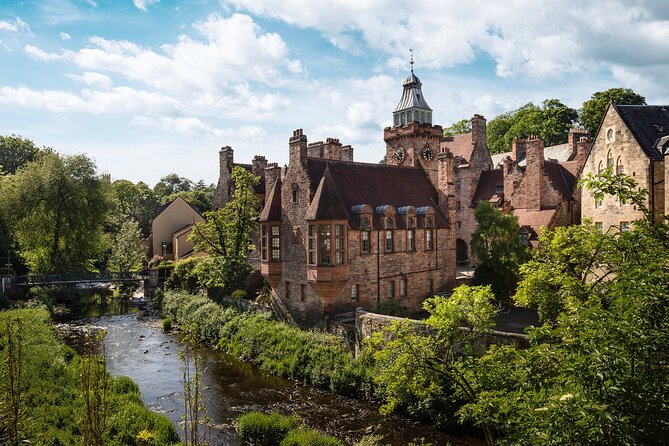
Edinburgh can be loud up close, even when you are only trying to look at pretty buildings. This tour avoids that by starting in Dean Village, a small pocket that drops you into a calmer rhythm almost immediately. You are still just a short distance from the main tourist magnet, Princes Street, but the vibe changes fast once you are near the water and stone structures of the village.
What makes that first move smart is how it sets up contrast. The New Town is planned, orderly, and built to impress. Dean Village feels older, practical, and shaped by industry and everyday work. The guide uses that contrast to point out how the city grew in different phases, not all at the same speed, and not all with the same priorities.
The walking pace is steady, not rushed. You get a mix of short stops for photos and quick explanations, then you move on while things are still fresh in your head. With a group capped at 20, you typically get enough room to actually see what the guide is indicating, instead of craning your neck at the back of a crowd.
You can also read our reviews of more walking tours in Edinburgh



Dean Village: medieval mills, bread, and a peaceful start
Dean Village works because it is not just a pretty street. It has a real past tied to practical work, especially milling. The tour begins at the Dean Village meeting point and then spends time exploring what remains, including mill stones and stone plaques decorated with baked bread and pies. That small detail matters. It tells you this place once served specific trades, bakers and weavers, and that the area mattered to everyday life.
You also get a sense of how the city can shift gear. One minute you are thinking about major Edinburgh landmarks, the next you are looking at stonework and water-adjacent spaces where people lived and worked. If you have already done the Old Town, this stop gives you a different Edinburgh flavor without making you travel far out of your way.
Why this is good value for your time: the tour packs Dean Village into the beginning, so you do not burn your energy bouncing around the most crowded sights first. It is also easy to enjoy even if you are not a hardcore architecture person. You can just take in the scale, the atmosphere, and the small visual clues the guide points out.
Charlotte Square and Edinburgh’s planned grandeur
After Dean Village, you head into the New Town, a UNESCO World Heritage area. That UNESCO label can sound like marketing, but here it is tied to something real you can see: the deliberate layout, the public squares, and the Neoclassical look that the New Town made famous.
Charlotte Square is one of the key places to understand the nickname Athens of the North. The guide explains the Scottish Enlightenment connection, and you feel why the city leaned into that idea. You are looking at elegant proportions and a kind of civic confidence that says ideas and education mattered.
What I like about this stop is that it is not only about style. The architecture becomes a doorway into how Edinburgh saw itself during the 1700s and 1800s. Even if you have never studied the Enlightenment, the tour gives you enough context to understand why names like Hume and Smith show up so often in Edinburgh conversations.
Potential trade-off: if you are expecting a long indoor visit, this is not that kind of tour. Most of the impact comes from seeing the buildings and hearing the story out on the street. If you love standing outside and listening, you will be happy.
The Georgian House: what life in a high-society home meant
In the Charlotte Square area, the tour pauses outside the Georgian House, run by the National Trust for Scotland. This is your chance to connect Neoclassical styling to how people actually lived. The guide frames it as a window into high society life in 18th and 19th century Edinburgh.
Even without going inside, the stop helps you picture the social world that shaped the New Town. You learn to look at the building as more than a facade, because in Georgian-era design, details often supported status, comfort, and routine. The guide’s explanations make that visible, and it helps you read other Georgian streets later on your own.
One practical note: the stop is brief. You are not meant to linger here for hours. Instead, it works as a quick orientation point before you move into the smaller street textures, where the stories shift from grand houses to everyday city life.
Rose Street and the story behind secret bars
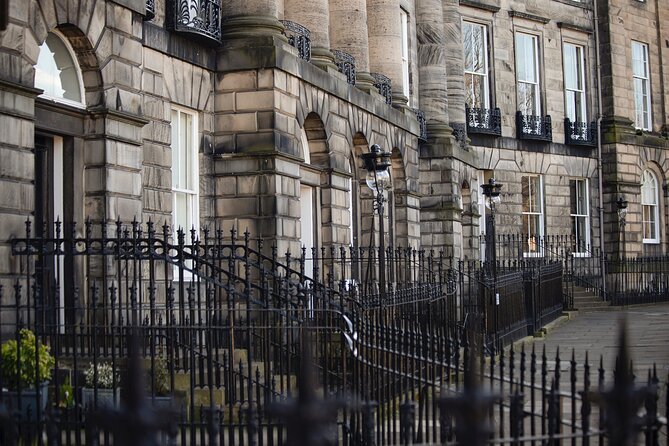
Once you move from Charlotte Square into the New Town grid, you take a lane called Rose Street. This is known for pubs, and the tour uses that energy to tell a different kind of story. You are not just hearing trivia about drinking spots. You learn the reason behind the establishment of secret bars in the New Town.
The phrase secret bars can sound mysterious for the sake of mystery, but on this walk it is treated as social history. The guide ties it to how the New Town functioned, and why people wanted or needed certain kinds of spaces. That turns what could be a simple pub street into a place where you understand behavior, privacy, and city culture.
If you like walking tours that do more than recite dates, this is a strong part. It is also a useful angle for planning your own evenings after the tour, because you start noticing how and why certain pubs feel different from each other.




Castle Street to Princes Street Gardens: quick views you will remember
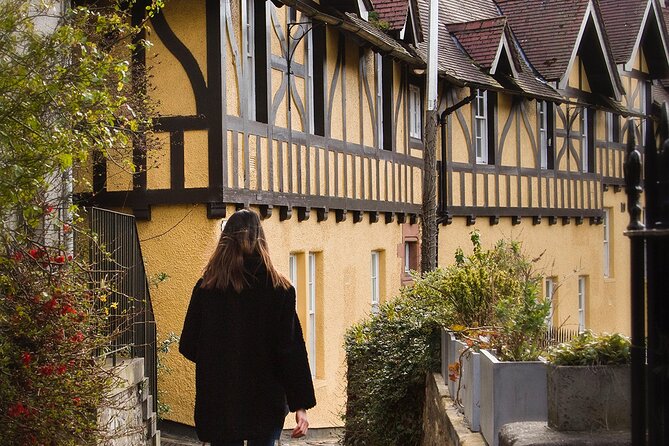
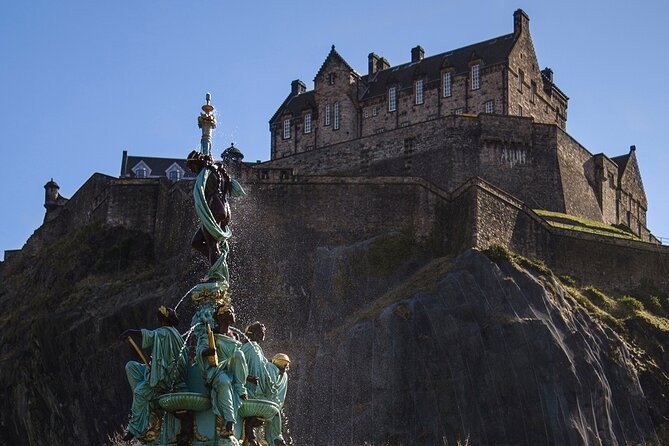
From Rose Street you turn toward Castle Street. This is where you get a view of the castle and Castle Rock. The guide uses these viewpoints like punctuation marks, short stops that let you absorb the shape of the city and how the New Town relates visually to the Old Town’s dramatic backdrop.
Then you cross Princes Street and enter Princes Street Gardens. This part is especially handy because it combines a break with sightlines. You get public art examples, plus yet another castle view from a more relaxed setting than a roadside pull-over.
What I like here: the tour makes you slow down just enough to switch from architecture listening to scenery watching. If you have been doing museums and indoor sites, that greenery and openness helps your brain reset.
If you are traveling in cooler months, bring a layer. Gardens can feel breezy even when the streets are dry.
Scott Monument: a writer-focused landmark with big scale
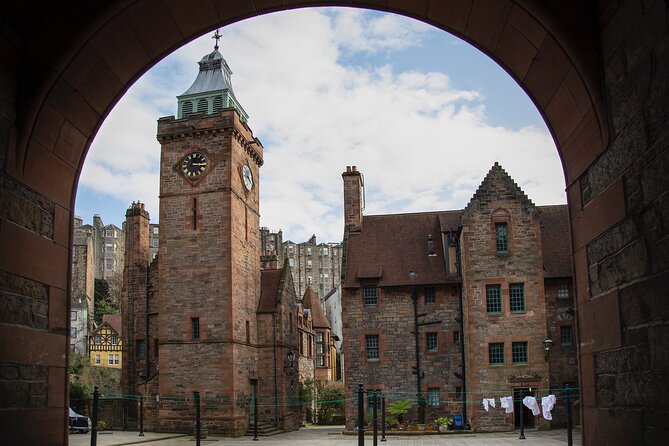
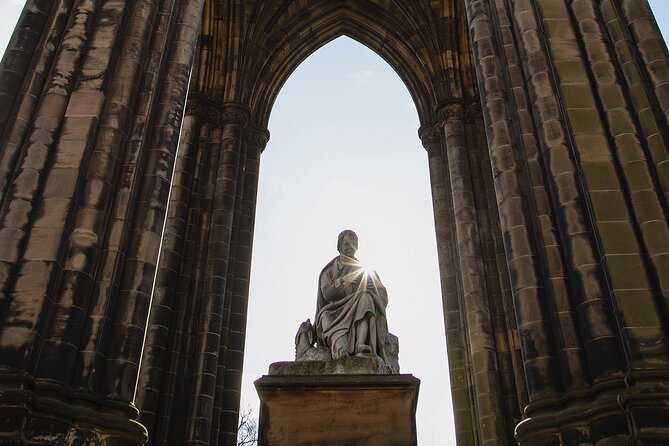
Next comes the Scott Monument, one of Edinburgh’s landmarks. The guide covers its history and architecture, and adds a neat fact that helps the place stick in your mind: it is the largest monument in the world dedicated to a writer.
Even if you are not a literature buff, that scale changes how you see it. The monument becomes a statement about what Edinburgh valued, not only who lived there. The Enlightenment themes you heard earlier start to echo here. Scotland did not just build grand houses and squares. It also built symbols for ideas, writing, and public recognition of intellectual life.
This stop also works as a photo moment that does not require you to fight crowds as hard as you might elsewhere. You are still in a main area, but the tour pace helps keep the moment focused.
George Street and The Dome: statues, dining energy, and Neoclassical details
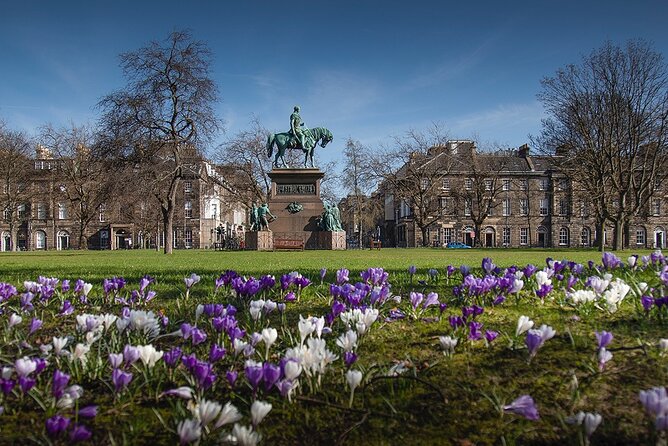
After the Scott Monument, you head toward the east part of George Street. This street is famous for cafes, restaurants, and statues, and the guide points out notable figures like King George IV and James Clerk Maxwell.
I like this segment because it brings the New Town to life as a place you can actually use. Yes, you are learning about design, but you are also seeing how modern Edinburgh still carries that 18th and 19th century ambition in its streetscapes and public art.
Then you pass The Dome, with impressive Neoclassical buildings. The short stop format keeps things moving, but the guide’s focus on architectural clues makes it feel like more than just walking past shops. You start noticing how the facades line up, how the street curves and angles guide your views, and how the New Town’s plan makes walking feel logical rather than chaotic.
Melville Monument and Dundas House: where colonial ties enter the story
As you head toward the end of the walk, the conversation shifts again. At the Melville Monument, the guide explains why it was built and its connection to British colonial time. That topic is not always front-and-center on casual sightseeing walks, but here it is part of understanding how wealth and power shaped the city’s growth.
This is also where balance matters. The tour does not pretend the story is only pretty architecture and bright ideas. It includes the darker thread of colonialism and how it contributed to how Edinburgh developed. You end up with a more complete picture of what you are seeing.
Across the street is Dundas House. The guide points out that the architect was inspired by the books of Andrea Palladio, a major Renaissance architect. If the building is open, you might step inside, which adds a practical payoff at the end: you get a closer look at the kind of Neoclassical influence you heard about earlier, without having to plan a separate museum visit.
The walk ends outside Dundas House in St. Andrew Square, a spot that is central enough to make it easy to continue your day.
Value and pacing: why this tour feels worth the money
At $27.37 per person for about 2 hours 15 minutes, the price is the kind that makes you want to spend it on the guide instead of the transportation puzzle. You are paying for a curated route and an on-the-spot explainer, and the route is built to give you variety: mill-town calm, UNESCO squares, writer-focused monuments, and a few key architectural stops.
Two features make it especially practical:
- Mobile ticket means you can keep things simple once you arrive.
- Small group size up to 20 keeps the walk manageable and helps you hear the guide’s point when the group stops for a view.
Timing matters too. The route uses short stops, so you do not get stuck waiting in one place for long. That is helpful if you have limited time in Edinburgh or you already did other major sights. It is also friendly for planning a later meal, since you finish back in a central New Town area rather than at the edge of town.
If you are doing this on a day when you expect lots of walking anyway, this tour is a good way to turn exercise into education without feeling like a school day.
Who should book this Dean Village and New Town walk
This is a great fit if you want:
- A mix of architecture and story, not just photos
- A city walk that covers Dean Village plus the New Town UNESCO zone
- Explanations that connect buildings to people and ideas, including David Hume, Adam Smith, and Arthur Conan Doyle
- A route that gives you multiple castle views without long detours
It may be less ideal if you want lots of indoor time or you prefer long museum-style visits. This is mainly an outdoor listening experience, and it assumes you are comfortable on sidewalks and public spaces.
It is also a good pick after you have seen the Old Town. Dean Village and the New Town show two different Edinburgh personalities, and the contrast helps the city click.
Should you book this tour?
I think it is a smart book for first-time Edinburgh visits, especially if you already know the Old Town is coming and you want something different after. Dean Village gives you a quick reset, while the New Town stops tie everything together with a clear theme: how Edinburgh’s planned city identity formed, who influenced it, and how darker forces like colonialism shaped the growth too.
If you are deciding between a basic highlights loop and a story-driven walk, this one leans the right way. The route is short enough to fit into a busy schedule, and the guide-led storytelling makes the architecture easier to recognize later. If you like guided walks with small group energy and clear stops, yes, book it.
If the weather is iffy, watch forecasts and be ready to reschedule, since the experience is weather dependent. And if you hate walking on busy streets, plan for a couple of crossings and treat those moments as quick transfers between viewpoints.
FAQ
What is the duration of the Edinburgh Dean Village and New Town walking tour?
It lasts about 2 hours 15 minutes.
How much does the tour cost?
The price is listed as $27.37 per person.
Where does the tour start?
The meeting point is 2-4 Hope St, Edinburgh EH2 4DB, UK.
Where does the tour end?
The tour ends outside Dundas House in St. Andrew Square, Edinburgh EH2 2YB, UK.
What is included in the price?
The tour includes a local tour guide.
Is there a limit on group size?
Yes. The maximum group size is 20 travelers.
Is a mobile ticket provided?
Yes, the tour uses a mobile ticket.
What if the weather is bad?
The experience requires good weather. If it is canceled due to poor weather, you will be offered a different date or a full refund.
Is free cancellation available?
Yes. You can cancel for a full refund up to 24 hours in advance. If you cancel less than 24 hours before, the amount paid is not refunded.
Are service animals allowed?
Yes, service animals are allowed.
More Walking Tours in Edinburgh


More Tours in Edinburgh
More Tour Reviews in Edinburgh
Not for you? Here's more nearby things to do in Edinburgh we have reviewed










Edinburgh Old Town & Hidden Corners, compared.
 ★ 4.5Underground Vaults Walking Tour in Edinburgh Old TownFrom $338,506 reviews
 ★ 4.8Old Town History and Tales Walking TourFrom $242,361 reviews
 ★ 5.0Old Town Walking Tour History and Tales in EdinburghFrom $242,168 reviews
 ★ 4.5Old Town and Underground Historical TourFrom $271,802 reviews
 ★ 4.4Old Town and Underground Ghost TourFrom $221,768 reviews
 ★ 4.6Dark Secrets of the Old Town Ghost Walking TourFrom $241,671 reviews
 ★ 5.0Royal Mile and Old Town Walking TourFrom $481,596 reviews
 ★ 5.0Old Town Historical and Underground TourFrom $271,574 reviews
Browse the lists this tour appears in