
Reviewed · HISTORICAL TOURS
A History of Witchcraft in Edinburgh: A Self-Guided Audio Tour
Witchcraft in Edinburgh has footnotes you can hear. This self-guided audio tour strings together key stops from Holyrood to Castlehill, with clear narration and directions that keep the story moving. I especially love the sensible storytelling that stays factual without turning dry, and the professional, high-quality narration that makes the details easier to follow. One consideration: you will need your own smartphone and headphones, and you are walking a pretty serious uphill route to finish.
You start outside the Palace of Holyrood and end at the top of Castlehill just before the Esplanade. Along the way, you pass the Royal Mile, Scottish Parliament, and St Giles’ Cathedral exterior, plus smaller streets and closes where the witchcraft talk lands in a real place, not a classroom. If you prefer guided conversation, this is still great, but you have to be comfortable pressing play at each stop.
Key highlights you will actually care about
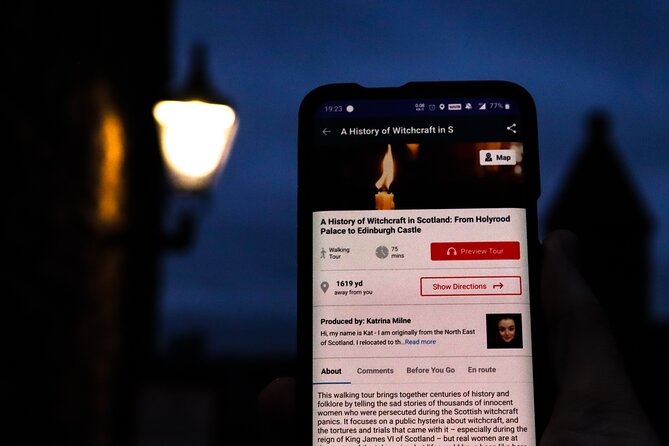
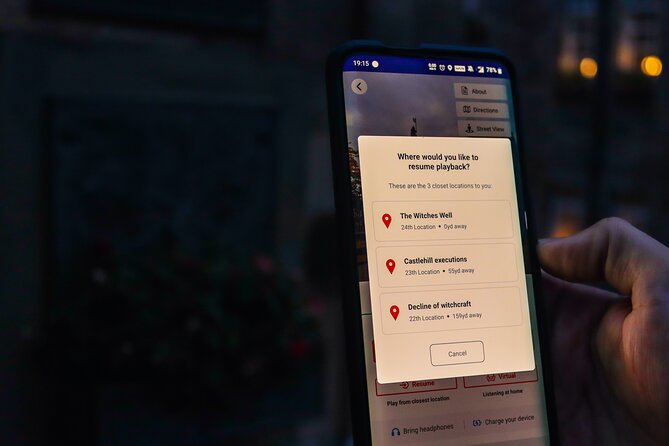
- VoiceMap with offline audio and maps, so you can keep going without live data
- Lifetime access to the tour in English, which is great value for a repeatable walk
- Professional narration that keeps the facts from feeling textbook
- Concrete Edinburgh landmarks, from Holyrood to St Giles’ Cathedral and Castlehill
- Dark, specific subject matter including confession extraction methods mentioned in the stops
- Stops timed to how you walk, with directions designed for a smooth self-guided flow
Price and what you get for $9.99 in Edinburgh
At $9.99 per person for a 1 to 1.5 hour walking experience, this is one of those low-cost ways to add a strong theme to a classic route. The big reason it feels like good value is that you get more than audio facts. You get a route plan that follows Edinburgh’s Witchcraft-related geography, plus offline audio, maps, and geodata inside the VoiceMap app.
You also get lifetime access. That matters if you like doing a city walk, taking a break, then returning later when you notice something new on your second pass. This one is built for that, because the story is tied to streets and building fronts you will keep seeing around town.
The trade-off is the standard self-guided reality: no included smartphone, no included headphones, and no tickets to any indoor stops. So your cost is basically the story. You cover the listening hardware yourself.
You can also read our reviews of more guided tours in Edinburgh


How the self-guided VoiceMap tour works (and how to set yourself up fast)
This is a private experience for your group only, and it runs in English. The operator is VoiceMap Audio Tours, using the VoiceMap app on Android and iOS.
Here is what you should do before you even start walking:
- Download the tour audio, maps, and geodata in the app while you have a connection. The tour includes offline access, but you still want to set it up early.
- Bring headphones and make sure your phone battery is topped up. You will be in walking mode for about 1 to 1.5 hours.
- Expect a route that uses Edinburgh’s real streets, including side lanes and the climb up to Castlehill. The final stretch is not flat.
Once you are walking, you are following prompts at each stop. The included direction support is a core part of why people rate this so highly for usability. You are not left guessing where to go next.
Route overview: Holyrood to Castlehill, with witchcraft stops in between
The tour is basically a themed walk along one of Edinburgh’s most famous corridors, the Royal Mile area, plus connectors that take you into smaller passageways. It starts outside Holyrood, then works uphill and westward until you finish at the top of Castlehill.
Key idea: the narration ties witchcraft to the places you can see today. Instead of keeping it abstract, it gives you anchors: a close, a house tied to a named reformer, a cathedral exterior where confession methods are discussed, and viewpoints where later stories are set.
You will cover:
- Holyrood area, then up the Royal Mile
- Scottish Parliament area
- Bake House Close
- John Knox House
- High Street
- Outside St Giles’ Cathedral
- Victoria Terrace
- The final climb and ending at Castlehill before the Esplanade
Stop-by-stop: what you will hear at each place

Outside the Palace of Holyrood: start point and how to get going
The tour begins outside the Palace of Holyrood. The first job here is simple: you get the app instructions and a quick sense of how the tour will flow. This matters more than you might think. Self-guided tours succeed or fail based on whether you understand the mechanics early.
Practical tip: use this first minute to confirm you have audio working before you move into the denser walking sections.
You can also read our reviews of more historical tours in Edinburgh



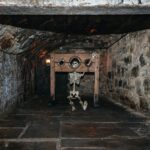

Along the Royal Mile: the main corridor that frames the whole theme
From Holyrood House up the Royal Mile toward the top of Castle Hill, you are walking through the city’s most recognizable spine. In the tour, this section acts like a moving timeline. As you rise through Edinburgh, the story context builds into what comes next.
This is also where you will feel the pacing works. The audio is not one long lecture. It changes as the streets change, so the walk feels connected rather than repetitive.
Scottish Parliament area: a quick historical note while you pass by
You pass the Scottish Parliament and get a short bit of context as you walk. You should expect this to be more like a scene-setting moment than a full lesson. It breaks up the walking rhythm and keeps the theme attached to modern Edinburgh.
If you like history-light moments that keep the story tethered, this stop fits.
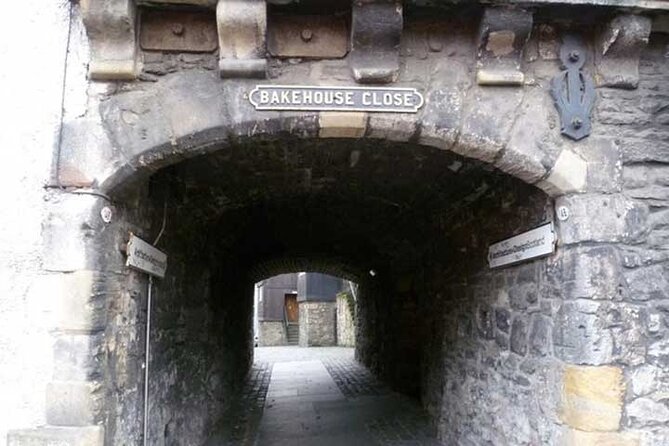
Bake House Close: small space, witchcraft backstory
Next you go into Bake House Close. This is where the tour leans into Edinburgh’s older street texture. Closes and narrow passages are part of what makes the city feel like it has layers.
Here, you will hear about the history of witches before continuing. The placement is smart. After covering bigger streets, moving into a close gives your brain a different scale. The theme feels more grounded.
John Knox House: the Scottish Witchcraft Act connection
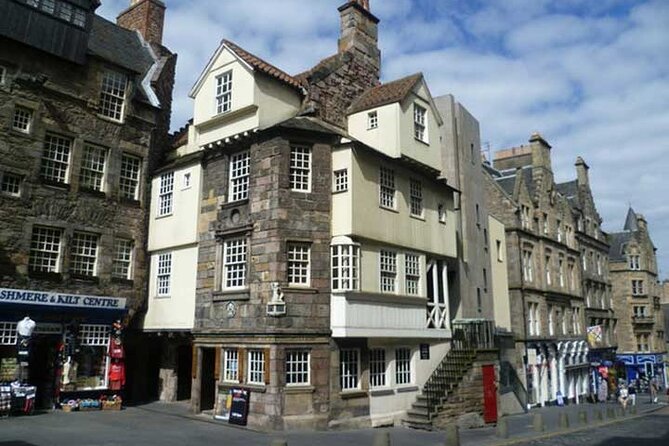
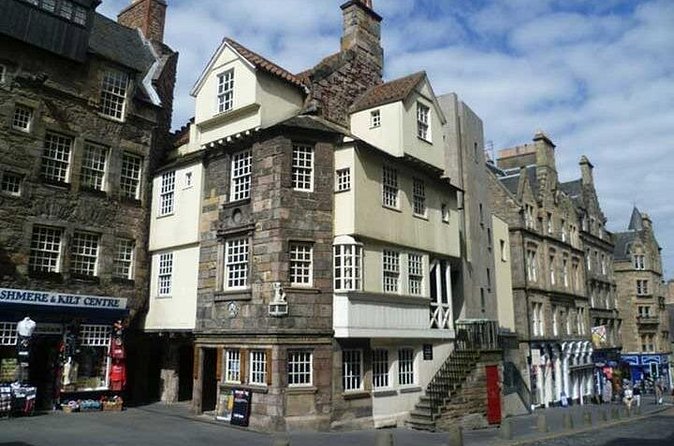
You then pass by John Knox House. This stop is specifically tied to Knox and how he supported the Scottish Witchcraft Act. That is a strong anchor because it links the witchcraft story to a named figure, rather than only anonymous fear and rumor.
You should think of this part as your political and legal bridge. It helps you understand that witchcraft accusations were not just gossip, they were part of a framework that people believed in.
High Street: more witchcraft context on foot
As you pass through parts of High Street, you hear additional history about witchcraft in Scotland. This section feels like the connective tissue, adding meaning to what you have already heard at Holyrood, the close, and John Knox House.
This is also a good stretch to keep your pace steady, because you will want enough attention saved for what comes later at the cathedral and the ending.
Outside St Giles’ Cathedral: the heavy part, with confession extraction methods
You then go around the outside of St Giles’ Cathedral. This is one of the most intense stops on the route. The narration includes details about witchcraft and torture methods used to extract confessions from suspected witches.
How to handle this: go in ready for uncomfortable subject matter. The tour does not try to soften the reality of what the accusations and punishments could involve. If that theme is tough for you, plan to keep the volume at a comfortable level so you can still enjoy the walk around a major landmark.
Why this stop is valuable even if you know some of the background: you are standing in a real central space, not just reading. The cathedral exterior gives the story a physical sense of authority and seriousness.
Victoria Terrace: Major Thomas Weir, the Wizard of West Bow
You pass over Victoria Terrace and hear the story of Major Thomas Weir, also known as the Wizard of West Bow. This is where the tour shifts slightly from the legal and institutional side into named characters and local legend-like material.
That name recognition is useful. It gives you a handle you can remember later, and it helps the full witchcraft theme feel more personal and human rather than only procedural.
Ending at Castlehill: the last witch of Scotland story
The tour ends at the top of Castlehill, just before the Esplanade. As you walk up the street, you hear the story of the last witch of Scotland.
This is a natural closing point because you are finishing on elevated ground with big views and a sense of arrival. Even if you do not remember every detail, you will likely remember the arc ending: accusation, law, confession, then a last chapter wrapped into a dramatic finish location.
What makes the narration better than a generic audio walk
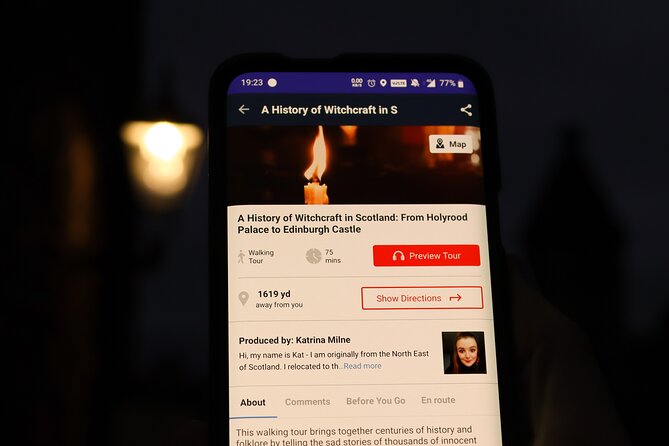
A lot of audio tours either drown you in dates or rush past the meaningful parts. This one gets praised for being factual without feeling like a textbook, and I agree with that vibe from how the theme is arranged.
Two things help it work:
- The story keeps a sensible pacing across different streets, so you feel carried forward rather than stuck at one stop too long.
- The narration quality is described as professional and high quality, including at least one named voice actor, Kat. That kind of clear delivery matters when the topic turns darker, like the confession extraction methods.
The result is that you are learning without feeling lectured. And you still get directions that keep you from getting lost.
Directions, timing, and walking effort you should plan for
This is approximately 1 hour to 1 hour 30 minutes. That range is realistic because you are walking a long themed route and pausing at multiple stops.
You should plan for:
- A start at the Palace of Holyrood area (EH8 8DU)
- A walk up toward Castle Hill
- An end at the top of Castlehill near the Esplanade (EH1 area)
Because the ending is up high, wear shoes you feel good in for uphill walking. This is not a couch-on-the-go kind of audio tour.
Also, you get opening hours listed as 12:00 AM to 11:59 PM within the validity dates shown. Practically, that means you can fit it into your day without needing a tight timed entry.
Who this audio tour is best for

This is a great fit if you:
- Want a low-cost way to add a theme to a classic Edinburgh walk
- Like stopping outside major landmarks and hearing context tied to them
- Prefer self-paced learning, with audio and directions that handle the flow
It is also a good match if you want something repeatable. Lifetime access means you can redo it when you spot new details in the streets.
You might not love it as much if you:
- Want an in-person guide to ask questions
- Dislike stories that include torture and confession extraction methods
- Prefer fully indoor sightseeing with tickets and exhibits (this tour does not include those)
Practical tips so you enjoy it more
These are the small things that make the biggest difference on self-guided walks:
- Bring headphones that work reliably with your phone.
- Download for offline use before you leave.
- Keep your phone screen brightness manageable so you can still check prompts.
- When you hit a side lane or close, slow down. Those spaces can be easy to walk through too fast.
If you are pairing it with other sightseeing, try not to schedule back-to-back busy stops right before the cathedral portion. The cathedral exterior stop is where the emotional weight is highest.
Should you book this Edinburgh witchcraft audio tour?
I would book it if you want a standalone walking experience that adds story, names, and context to Edinburgh’s core streets without extra ticket costs. The combination of offline VoiceMap support, lifetime access, and professional narration makes it feel like a smart value pick for $9.99.
I would think twice if you know you are sensitive to dark historical details, especially the narration that mentions torture methods used to extract confessions. Also, if you strongly prefer guided interaction, a self-guided format will feel limiting.
If you fall in the first camp, you will likely enjoy how the route connects Holyrood, the Royal Mile climb, the cathedral exterior, and the end at Castlehill into one coherent walk about witchcraft in Scotland.
More Guided Tours in Edinburgh


More Tours in Edinburgh



More Tour Reviews in Edinburgh
Not for you? Here's more nearby things to do in Edinburgh we have reviewed








Historical Tours, compared.
 ★ 4.8Edinburgh Castle Guided History Tour with TicketsFrom $507,747 reviews
 ★ 4.9Whisky Tasting with History and StorytellingFrom $242,451 reviews
 ★ 4.8Old Town History and Tales Walking TourFrom $242,361 reviews
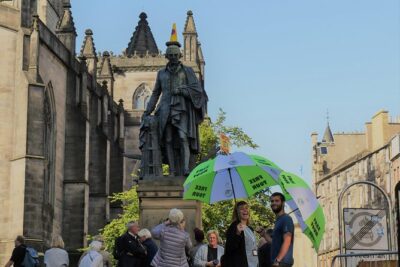 ★ 5.0Old Town Walking Tour History and Tales in EdinburghFrom $242,168 reviews
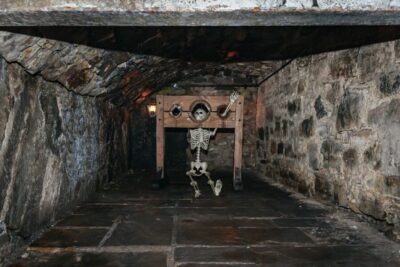 ★ 4.5Old Town and Underground Historical TourFrom $271,802 reviews
 ★ 5.0Old Town Historical and Underground TourFrom $271,574 reviews
 ★ 4.5Multi-Sensory Small-Group Historic Vaults Tour in EdinburghFrom $371,384 reviews
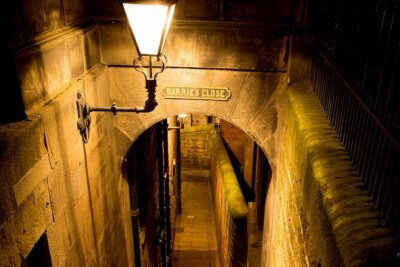 ★ 4.8Witches & Haunted History Walking TourFrom $241,290 reviews
Browse the lists this tour appears in